Sailgene Technology

Single-Cell RNA Sequencing: Why Bulk RNA-seq Hides Critical Biology
Release time:2026-08-29 15:16:49
A biological signal can exist, be reproducible, and remain difficult to interpret—not because the signal is absent, but because the measurement does not have enough resolution to identify its biological source.
Transcriptomic technologies have transformed our understanding of gene regulation across development, disease progression, immune responses, and environmental adaptation. Among these approaches, bulk RNA sequencing (bulk RNA-seq) remains one of the most widely used technologies because it provides robust measurements of gene expression across large numbers of samples at relatively high efficiency and manageable cost.
However, biological systems are rarely composed of uniform cell populations. Tissues contain multiple cell types, cellular states, and molecular programs that respond differently under the same biological condition.
When RNA is extracted from an entire tissue sample and sequenced together, the resulting transcriptomic profile represents an average signal generated from all cells present. This approach is powerful for identifying broad molecular patterns, but it can also obscure biologically important signals originating from specific cell populations.
A transcriptional change occurring in a rare but functionally important cell population may be diluted by surrounding cells that do not undergo the same molecular transition.
Therefore, a central challenge in modern transcriptomics is no longer simply detecting whether a molecular change exists, but determining: Where does the change occur, and which cell population drives the biological process?
The Hidden Limitation of Tissue-Level Transcriptomics
Bulk RNA-seq measures the overall abundance of transcripts within a tissue sample. However, the expression level of a gene reflects a combination of two distinct biological factors:
-
Changes in transcriptional activity within individual cells.
-
Changes in the relative abundance of different cell populations.
These two mechanisms can generate similar expression patterns but represent fundamentally different biological events.
For example, increased expression of immune-related genes in a tumor sample may indicate that immune cells within the tumor microenvironment have become transcriptionally activated.
Alternatively, the same expression pattern may result from an increased proportion of immune cells in the tissue, without substantial changes in the transcriptional state of each individual immune cell.
Because bulk RNA-seq does not retain information about the cellular origin of each transcript, distinguishing between these explanations remains challenging.
This limitation becomes particularly important in complex biological systems where cellular composition and cellular activity change simultaneously, including tumors, immune tissues, and the nervous system.
Cellular Heterogeneity: A Fundamental Challenge Across Biological Research
Cellular heterogeneity is now recognized as a fundamental feature of biological systems rather than a technical complication.
In cancer research, tumors are no longer considered homogeneous populations of malignant cells. Instead, they contain diverse cancer cell states together with immune, stromal, and vascular populations that interact within the tumor microenvironment.
A single-cell RNA sequencing study of hepatocellular carcinoma analyzed more than 51,000 individual cells from tumor and adjacent non-tumor tissues, revealing distinct cellular populations and cell-type-specific molecular patterns associated with tumor progression. These cellular signals represent biological differences that are difficult to distinguish when all cell populations are combined into a single bulk measurement (Chen et al., 2024).
In immunology, cellular diversity is equally important. Different immune cell populations can respond differently to the same genetic background or environmental stimulus.
A large-scale single-cell study across fourteen circulating immune cell types from nearly one thousand individuals demonstrated that genetic regulation of gene expression can be highly cell-type specific, with some genetic variants showing different effects across immune populations. These cell-specific regulatory effects would be difficult to resolve from bulk blood measurements alone (Yazar et al., 2022).
Similarly, in neuroscience, the complexity of brain tissue makes cellular resolution essential. A recent single-nucleus RNA sequencing study analyzing more than 600,000 nuclei from postmortem multiple sclerosis (MS) brain samples identified distinct glial responses across brain regions and cell types, revealing disease-associated molecular patterns that varied substantially between cellular populations (Macnair et al., 2025).
Across different research fields, the underlying challenge is the same: Biological signals are often generated by specific cellular populations, not by the tissue.
From Tissue Average to Cellular Resolution
Single-cell RNA sequencing (scRNA-seq) and single-nucleus RNA sequencing (snRNA-seq) address this limitation by separating transcriptomic measurements from individual cells or nuclei.
Instead of measuring one combined tissue profile, these approaches assign molecular information to individual cells through cellular barcoding, allowing researchers to identify cell populations and compare molecular states within specific cellular contexts.
This enables researchers to answer a different biological question: “Which cells are responsible for this change?”
Large-scale single-cell atlas projects have demonstrated how much biological information is hidden within tissue averages.
The Tabula Sapiens project generated a comprehensive single-cell transcriptomic atlas across multiple human organs, revealing extensive cell-type diversity and molecular variation between tissues that could not be fully captured by traditional tissue-level approaches (Tabula Sapiens Consortium, 2022).
However, identifying the responsible cell population represents only one layer of biological resolution.
A single cell can produce multiple transcript isoforms from the same gene through alternative splicing, alternative transcription start sites, and other regulatory mechanisms.
These isoforms can differ in stability, localization, regulatory function, and protein-coding potential.
Therefore, after identifying: Which cell is changing?
A further question remains: Which transcript isoform within that cell contributes to the biological outcome?
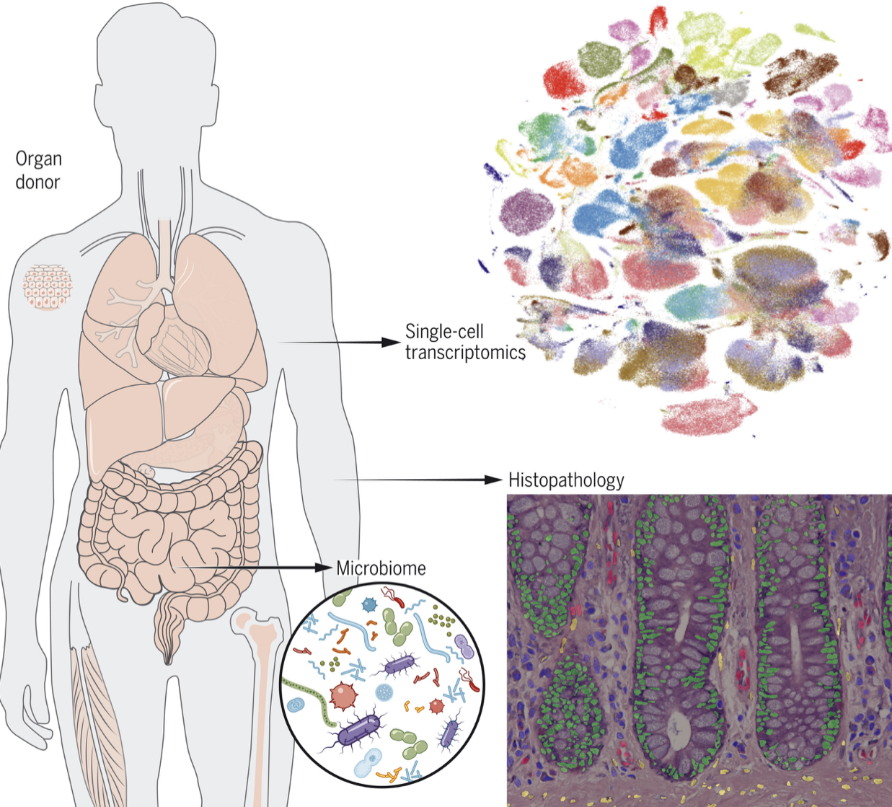
Figure 1. The Tabula Sapiens: A multiple-organ, single-cell transcriptomic atlas of humans
(Scource: https://www.science.org/doi/10.1126/science.abl4896)
Closing the Isoform Gap: Beyond Cellular Resolution
Standard single-cell RNA sequencing workflows are primarily based on short-read sequencing technologies.
These approaches are highly effective for identifying cell populations and measuring gene expression levels. However, short reads can provide evidence for alternative splicing events, but they usually cannot directly resolve complete full-length transcript isoforms.
As a result, short-read single-cell sequencing mainly answers the questions: Which genes are expressed in each cell, and what transcript patterns can be inferred from fragmented reads?
But many biological mechanisms depend on which transcript isoform is produced in each cell.
Long-read sequencing extends transcriptomic resolution by capturing much longer RNA molecules and enabling direct characterization of full-length transcript structures.
When combined with cellular barcoding, long-read single-cell or single-nucleus transcriptomics can connect transcript isoform information with specific cell populations, revealing regulatory mechanisms that remain hidden in gene-level measurements.
A recent study of human neurodegenerative disease samples combined single-nucleus RNA sequencing with targeted long-read single-nucleus isoform sequencing to investigate transcript diversity in Alzheimer's disease, Parkinson's disease, and dementia with Lewy bodies.
The study identified extensive transcript isoform diversity and disease-associated transcript changes within specific cell populations, demonstrating that cells classified as the same type at the gene-expression level can still differ in their transcript-level regulation (Liu et al., 2024).
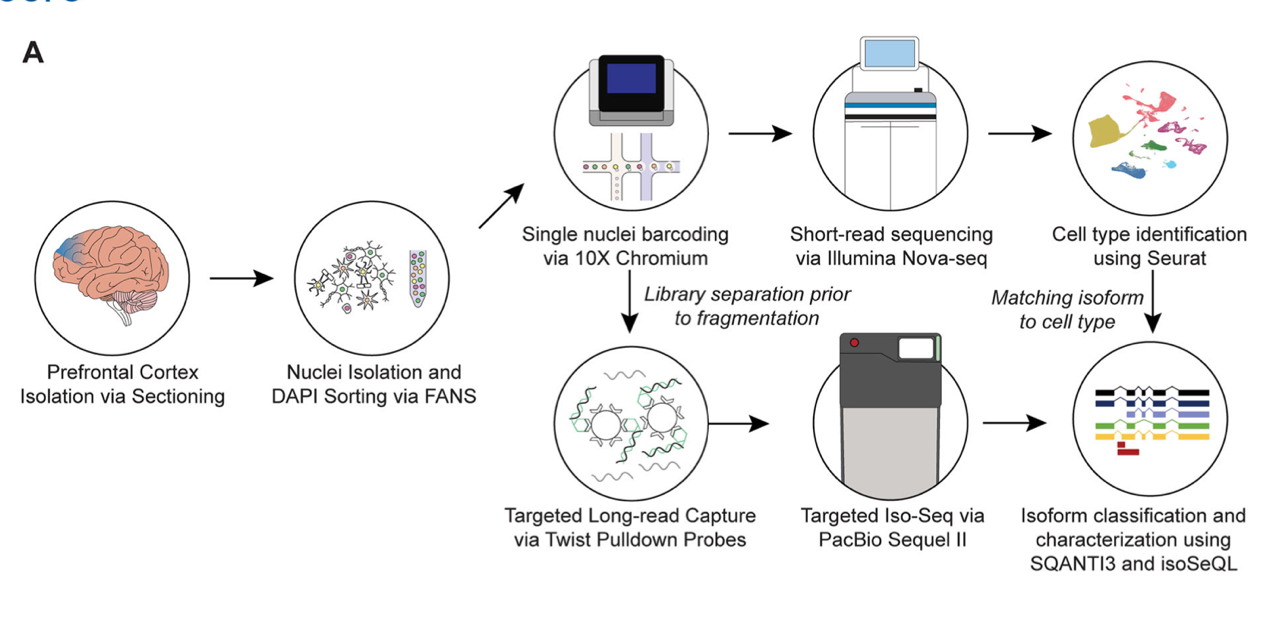
Figure 2. Experimental schematic of snRNA-seq and targeted Iso-Seq
(Scource: https://www.eneuro.org/content/eneuro/11/12/ENEURO.0296-24.2024.full.pdf)
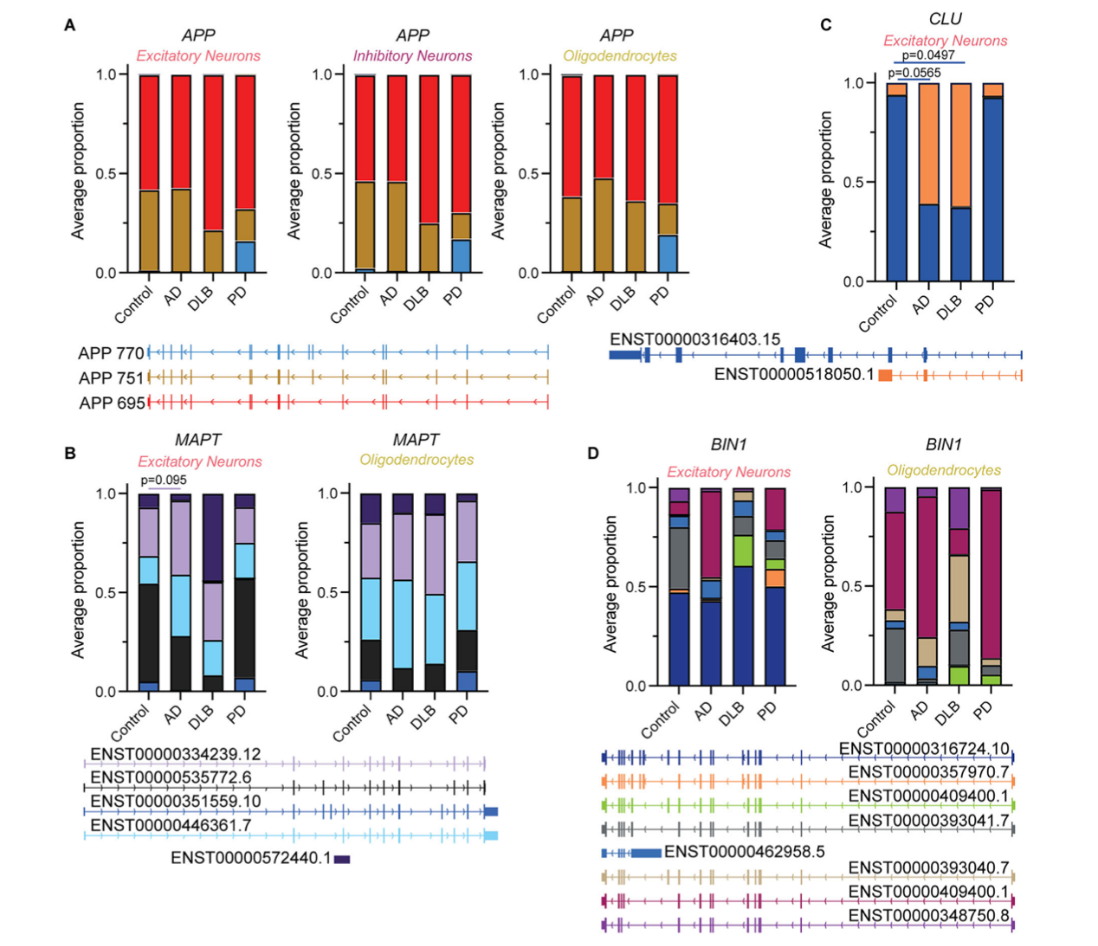
Figure 3. Proportion of FSM (full splice match) isoforms in APP, CLU, BIN1, and MAPT by cell type. Bar plot indicates average of sample read proportions for each isoform. Gene structure of the top expressed FSM isoforms is shown below. A, APP; B, MAPT; C, CLU; D, BIN1.
(Scource:https://www.eneuro.org/content/eneuro/11/12/ENEURO.0296-24.2024.full.pdf)
Choosing the Appropriate Resolution for the Biological Question
Higher-resolution sequencing technologies provide additional biological information, but they also introduce practical considerations.
Single-cell datasets generally contain fewer transcripts per cell compared with bulk RNA-seq, leading to increased dropout events where expressed genes may not be detected due to limited RNA capture.
In addition, single-cell studies usually include fewer biological samples because of higher experimental cost, which can limit statistical power for large population studies.
Long-read single-cell workflows introduce additional sequencing and computational requirements.
Therefore, the goal of transcriptomic research is not simply to choose the newest technology, but to match the resolution of the method with the biological question.
Bulk RNA sequencing remains valuable for large-scale studies focused on population-level expression patterns.
Single-cell and single-nucleus sequencing provide cellular resolution, allowing researchers to determine which cell populations contribute to biological changes.
Long-read transcriptomics adds another layer of resolution by revealing transcript isoform diversity and regulatory mechanisms beyond gene expression.
Each approach provides a different view of biological complexity.
Advancing Transcriptomic Research with Sailgene
Understanding complex biological systems requires sequencing strategies that match the resolution of the research question.
Sailgene provides integrated transcriptomic solutions covering tissue-level, cellular-level, and transcript-level analysis.
For studies focused on cellular heterogeneity, Sailgene provides single-nucleus RNA sequencing (snRNA-seq) based on 10x Genomics chemistry. This approach is particularly valuable for frozen or difficult-to-dissociate tissues, such as brain samples, where isolating intact cells can be challenging. Compared with whole-cell isolation, snRNA-seq avoids extensive tissue dissociation procedures that may damage fragile cells or cause loss and degradation of cytoplasmic RNA, providing a more reliable approach for profiling complex or archived tissues.
By assigning transcriptomic information to individual nuclei, researchers can identify cell populations and characterize cell-type-specific expression patterns.
For projects requiring transcript-level resolution, Sailgene provides long-read transcriptome sequencing solutions based on Oxford Nanopore Technologies (ONT), enabling full-length transcript characterization and isoform-level analysis.
For researchers interested in connecting cellular identity with transcript diversity, Sailgene supports long-read single-cell and single-nucleus transcriptomic workflows, enabling analysis of alternative splicing, transcript isoforms, and cell-specific transcript regulation.
By integrating advanced sequencing technologies with bioinformatics analysis, Sailgene helps researchers move beyond averaged measurements and uncover biological signals hidden within complex samples.
Conclusion
Biological systems are inherently heterogeneous.
A molecular signal that disappears in an averaged measurement is not necessarily absent. It may originate from a specific cell population, or from a specific transcript isoform within that population, that conventional measurements were not designed to resolve.
The evolution of transcriptomics reflects a continuous expansion of biological resolution: from tissues, to cells, to transcripts.
Understanding not only about what changes, but also including where it changes and which transcripts drive the change, is essential for transforming transcriptomic data into biological insight.
Frequently Asked Questions (FAQ)
1.Why can bulk RNA-seq miss important biological signals?
Bulk RNA-seq measures the average transcript abundance across all cells within a tissue sample. If a biological change occurs only in a specific or rare cell population, the signal may be diluted by other cell types and become difficult to detect.
For studies involving complex tissues, tumors, immune responses, or heterogeneous cell populations, single-cell or single-nucleus RNA sequencing can provide additional cellular resolution by linking gene expression changes to specific cell types.
2.When should researchers choose single-cell RNA-seq or single-nucleus RNA-seq instead of bulk RNA-seq?
The choice depends on the biological question.
Bulk RNA-seq is suitable when researchers aim to compare overall expression patterns across many samples, identify population-level changes, or perform large-scale transcriptomic studies.
Single-cell RNA-seq and single-nucleus RNA-seq are more suitable when the research question requires identifying specific cell populations, rare cell states, or cell-type-specific responses.
snRNA-seq is particularly useful for frozen, archived, or difficult-to-dissociate tissues where obtaining intact cells is challenging. Compared with whole-cell isolation, snRNA-seq avoids harsh dissociation procedures that may damage fragile cells or cause loss and degradation of cytoplasmic RNA. By profiling nuclear RNA, snRNA-seq provides a reliable approach for studying complex tissues such as the brain, tumors, and other challenging samples.
3.What additional information can long-read single-cell sequencing provide compared with conventional single-cell RNA-seq?
Conventional short-read single-cell RNA-seq is highly effective for identifying cell populations and measuring gene expression levels. It can also provide evidence of alternative splicing events through exon-junction analysis and computational prediction. However, because reads are generated from short transcript fragments, they usually cannot directly resolve complete full-length isoform structures. Long-read sequencing enables direct characterization of full-length transcripts, allowing isoform-level analysis within specific cell populations.
Long-read single-cell or single-nucleus transcriptomics can capture full-length transcripts and reveal information beyond gene expression, including:
-
alternative splicing events
-
transcript isoform usage
-
isoform switching between cell populations
-
cell-specific transcript regulation
This additional layer of information can help researchers understand not only which genes are active, but also which transcript forms contribute to specific biological functions.
4.Can bulk RNA-seq and single-cell/long-read sequencing be used together in the same project?
Yes. These approaches are complementary rather than mutually exclusive.
A common strategy is to combine bulk RNA-seq with single-cell or single-nucleus sequencing:
-
Bulk RNA-seq provides statistical power across large sample cohorts.
-
Single-cell sequencing identifies cellular sources of biological variation.
-
Long-read sequencing reveals transcript-level mechanisms within specific cell populations.
Combining different levels of resolution allows researchers to connect population-level patterns with cellular and molecular mechanisms.
References
-
Chen, J. et al.
Single-cell RNA sequencing reveals intratumor heterogeneity and prognostic contributions of γδ T cells in hepatocellular carcinoma.
Biochemical and Biophysical Research Communications(2024).
-
Liu, C.S. et al.
RNA Isoform Diversity in Human Neurodegenerative Diseases.
eNeuro11(12) (2024).
-
Macnair, W. et al.
snRNA-seq stratifies multiple sclerosis patients into distinct white matter glial responses.
Neuron(2025).
-
Tabula Sapiens Consortium.
The Tabula Sapiens: A multiple-organ, single-cell transcriptomic atlas of humans.
Science(2022).
-
Yazar, S. et al.
Single-cell eQTL mapping identifies cell type-specific genetic control of autoimmune disease.
Science376, eabf3041 (2022).
Previous Page
Previous Page
Contact Us
If you are interested in our long-read sequencing services or potential collaboration, please contact us. Our team is ready to support your research with tailored solutions. We also welcome feedback from users to help us improve our services.

Contact Us
Add: One Innovation Drive, Suite B3-406, Worcester, MA 01605, USA
在线客服添加返回顶部
右侧在线客服样式 1,2,3 1
图片alt标题设置: SAILGENE TECHNOLOGY INC.
表单验证提示文本: Content cannot be empty!
循环体没有内容时: Sorry,no matching items were found.
CSS / JS 文件放置地